
Understanding the connection
between PFO and stroke
Chances are, you learned that you have a patent foramen ovale (PFO) after you had an ischemic stroke. You are not alone. Nearly half of people whose strokes have no known cause also have a PFO. Three things you should know about PFO and stroke:
1. Having a PFO can lead to stroke.
2. One stroke increases the risk of having another stroke.
3. Closing a PFO reduces the risk of having another stroke.
Christine was back on the treadmill
1 week after her PFO closure
After Christine Lee’s stroke at age 33, her neurologist ordered a transesophageal echocardiogram to look for a PFO. Nearly 6 months after her first stroke, she had a TIA. Her neurologist then made a referral to an interventional cardiologist, and he recommended she get the PFO closure procedure within 7 days.
Hear about her experience
"I’ve had so many emails from readers who say their neurologist won’t make that referral to an interventional cardiologist. They just won’t. They want to know the name of my cardiologist, because they’re so desperate.”
— Christine Lee, USA
Hear more
patient experiences

AMPLATZER™ TALISMAN™ PFO OCCLUDER
Reduce your risk of
another stroke
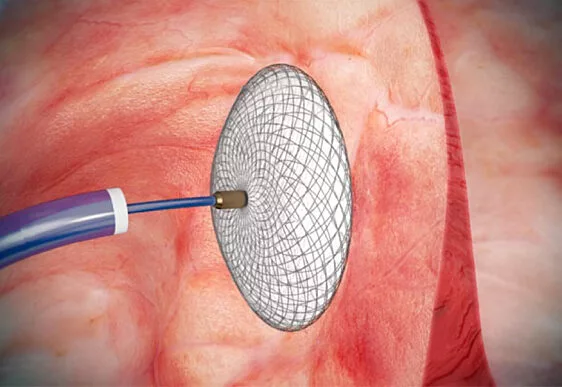
With the Amplatzer™ Talisman™ PFO Occluder, your doctor may be able to significantly reduce your risk of another stroke. Watch how the procedure works.

Reduce your risk of another stroke
You can take charge of reducing your risk. Talk to your doctor about lifestyle changes, medicine, and PFO closure.
MAT-2002543 v6.0 | Item approved for U.S. use only.
